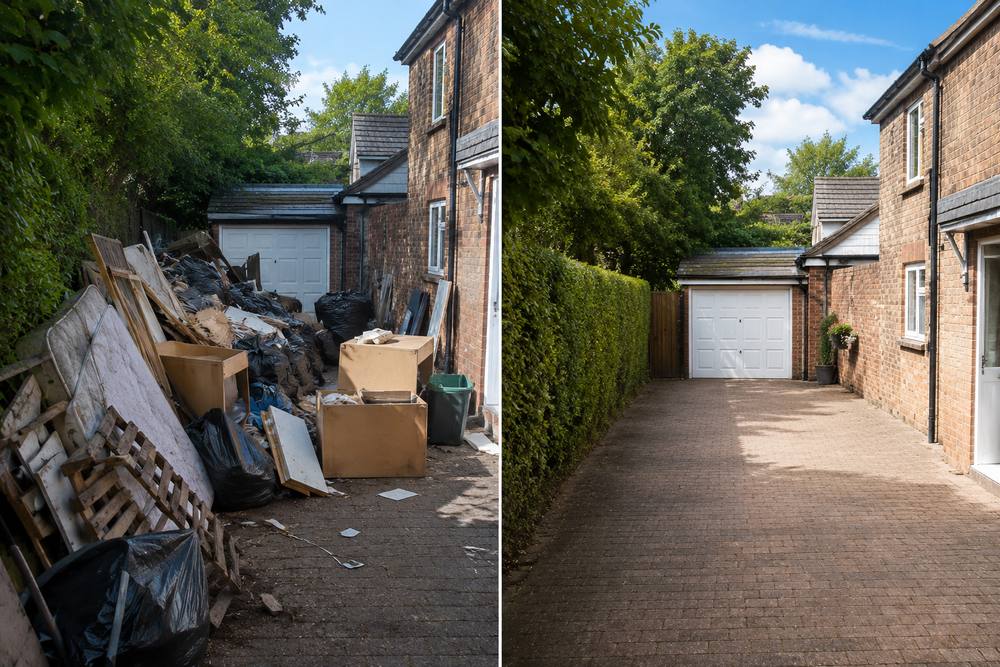

Quick Answer: Commercial strip-outs remove unwanted interiors before refurbishment. They require agreed scopes, safe service isolation, controlled removal and responsible waste clearance, leaving the property ready for the next stage of construction.
An office tenant moves out, but the space still contains partition walls, counters, floor coverings and equipment that do not suit the next layout. Commercial strip-outs remove those agreed interiors before refurbishment, refitting or redevelopment begins. The work must protect structural elements and services that will remain. A clear scope, safe sequencing and planned waste clearance help the next contractor start with a workable space.
Key Takeaways
- Agree in writing which rooms and items must be removed and which components must stay.
- Check for asbestos and other hazardous materials before disturbing existing building materials.
- Isolate affected services and agree the removal sequence before work starts.
- Plan access, loading areas and waste collection before materials are moved.
- Separate reusable items and recyclable materials from waste requiring disposal.
- Inspect cleared areas and document the handover before refurbishment begins.
What Is a Commercial Property Strip-Out?
A commercial property strip-out is the controlled removal of agreed internal elements before a building is refurbished, refitted, re-let or repurposed. Offices, shops, restaurants and other commercial premises may need this work when existing interiors no longer suit the intended layout.
A soft strip-out focuses on non-structural elements such as:
- Floor coverings
- Suspended ceilings
- Partitions
- Counters
- Fittings.
Removing load-bearing walls or altering structural frames involves different risks and must not be treated as routine interior clearance.
The scope should identify what comes out, what stays and the required handover condition. Our commercial strip-out services cover interior clearances and preparation ahead of refurbishment.
What Is Included in a Commercial Strip-Out?
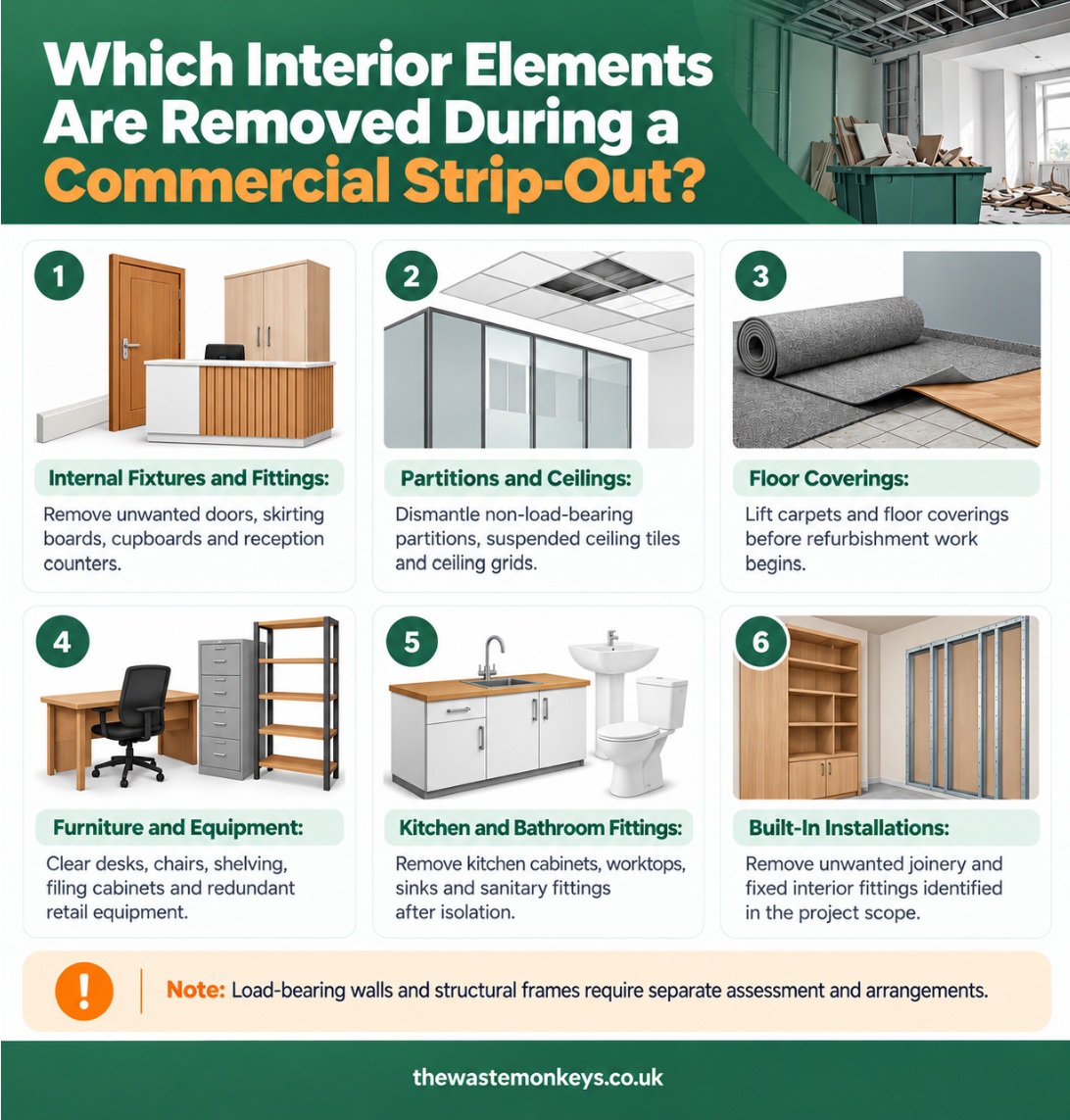
The contractor removes the items agreed in the project scope. Depending on the property, this may include fixed fittings, office partitions, suspended ceilings, floor coverings, furniture and redundant kitchen or bathroom installations. Structural elements and services marked for retention must remain protected.
Removal of Internal Fixtures and Fittings
This includes internal doors, skirting boards, built-in cupboards, reception desks, counters and fitted joinery. Contractors remove unwanted fixtures identified in the scope while protecting retained fittings and surrounding surfaces.
Office Partitions, Ceilings and Flooring
Non-load-bearing partition walls can be dismantled to create space for a different office layout. Suspended ceiling tiles, ceiling grids, carpets and other floor coverings may also be removed to prepare surfaces for refurbishment.
Furniture and Commercial Equipment Removal
Desks, chairs, filing cabinets, storage units, shelving and redundant retail or catering equipment can be cleared. Items suitable for reuse should be identified and separated before being mixed with waste or damaged during removal.
Kitchen, Bathroom and Unwanted Interior Removal
Strip-outs may include kitchen cabinets, worktops, sinks, toilets, basins and washroom fittings. Any connected water, electrical or gas services must be appropriately isolated before affected installations are disconnected or dismantled.
When Do You Need a Commercial Strip-Out?
Commercial strip-outs are useful when an existing interior conflicts with the layout or specification planned for the next occupier.
During an office handover, previous tenants’ partitions, reception desks and built-in storage may need removal to make room for a different workspace. Retail units may require old counters, display shelving and fitting-room structures to be cleared before new fixtures can be installed.
Older commercial interiors may contain:
- Damaged flooring
- Suspended ceilings
- Redundant fittings
- Outdated layouts
These elements may need stripping out to create a suitable base for new installations. Larger refurbishment and conversion projects can require selected areas to be opened up for access to walls, floors and building services.
A strip-out can cover one room, a floor or an entire unit. Minor decorative updates may need no strip-out, while structural demolition involves a different scope and additional safety considerations.
How Does the Commercial Strip-Out Process Work?
A strip-out should follow an agreed sequence from initial inspection to final handover. This helps contractors remove the specified items without disturbing components that must remain.
Assessing the Property and Agreeing the Scope
A site visit confirms which rooms and items are included, what must remain, access restrictions and the condition required at handover. Drawings and a schedule of retained items help prevent disputes.
Identifying Asbestos and Other Hazardous Materials
Older premises may hide asbestos behind ceilings, walls or flooring. The HSE says a refurbishment or demolition survey should identify hidden asbestos-containing materials likely to be disturbed. A competent surveyor must carry out this intrusive survey, and the affected area must be vacated during the work.
Isolating Services and Planning Safe Removal
Identify who will safely isolate affected electrical, gas, water, heating and alarm systems before dismantling begins. Where work involves structural demolition or dismantling, Regulation 20 of CDM 2015 requires arrangements to prevent danger and written plans before work starts. This requirement does not mean every soft strip-out is demolition.
Removing Agreed Fixtures and Protecting Retained Components
Remove the specified items in sequence while protecting retained finishes, building services and structural elements from avoidable damage. Barriers and restricted access may be needed to keep others away from the work area.
Inspecting and Preparing the Space for Handover
Check the cleared area against the agreed scope, remove debris and record exposed services, retained items, defects and outstanding issues. This gives the next contractor a clear starting point for refurbishment.
What Happens to Waste After a Commercial Strip-Out?
Plan waste routes before removal so reusable materials are not mixed with debris and potentially recoverable items are not damaged unnecessarily.
Sorting Reusable and Recyclable Materials
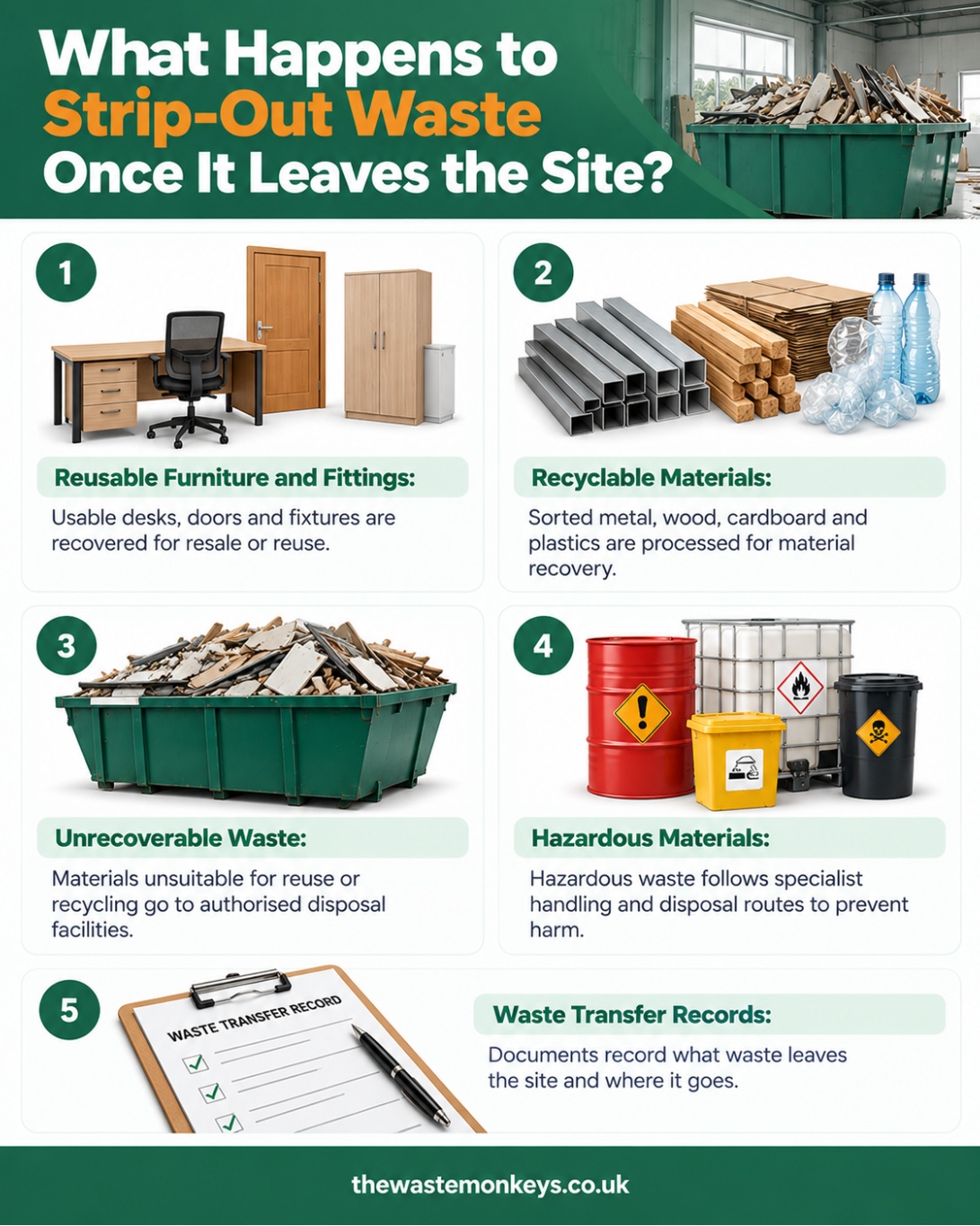
Before sending everything for disposal, identify items that can be used again, such as office furniture, doors, metal fittings and suitable building components. Keep reusable items separate from materials intended for recycling so they can be recovered without unnecessary damage or contamination.
Research from the University of Bath modelled a scenario in which demolition was avoided and estimated a 30% reduction in construction-related embodied carbon within its comparison. This supports considering which existing building elements can be retained rather than automatically removed and replaced.
Note: The figure is specific to the study’s model and does not represent a guaranteed saving from every commercial strip-out.
Responsible Disposal of Commercial and Construction Waste
Materials that cannot be reused or recycled must be sent to an appropriate facility authorised to handle that type of waste. Hazardous materials must be identified and managed separately because they may require specialist handling and different disposal arrangements.
The scale of the challenge is clear from Defra’s 2024 construction and demolition waste statistics for England. The provisional figures record 63.3 million tonnes of non-hazardous construction and demolition waste generated, of which 60.3 million tonnes was recovered. That represents a 95.3% recovery rate, meaning the waste underwent a recovery operation rather than simply being disposed of.
Recovery does not mean all the material was recycled.
For a commercial strip-out, separating waste correctly helps ensure each material goes to an appropriate recovery or disposal route.
Using Registered Waste Carriers
Check that the waste carrier is registered and the receiving facility is authorised to accept the waste. The GOV.UK waste duty of care code explains that businesses transferring waste must take reasonable steps to check who receives it, describe the waste accurately and keep the required transfer records. Hiring a contractor does not remove their responsibility to ensure the waste is handled lawfully.
Our commercial waste clearance service covers office furniture, construction materials and demolition debris.
Waste Transfer Notes and Disposal Documentation
Non-hazardous waste transfers generally require an accurate written description and appropriate transfer records, often a Waste Transfer Note. Hazardous waste movements require consignment notes. Keep the relevant documents to record where waste went and how the transfer was handled.
How Much Does a Commercial Strip-Out Cost?
Commercial strip-out prices depend on the property’s size, condition and agreed scope, so a reliable quotation usually requires a site inspection. The main cost factors include:
- Scope and volume including the number of rooms, fixtures, partitions, ceilings and floor coverings being removed.
- Access and working conditions including upper floors, limited loading space, occupied premises and restricted working hours.
- Surveys and specialist work including asbestos investigation, hazardous material handling and service isolation.
- Waste arrangements including waste volume, material segregation, transport, treatment and disposal.
- Protection and salvage including the extra handling needed to preserve retained components or recover reusable items.
Salvaging materials does not automatically reduce the final cost because sorting, storage and transport also require labour. Request an itemised, site-specific quote covering removals, waste arrangements, exclusions and handover requirements.
Commercial Strip-Outs vs Skip Hire (Which Do You Need?)
A commercial strip-out service is designed to remove agreed interiors, organise dismantling and clear the resulting waste. It suits projects involving:
- Office partitions
- Suspended ceilings
- Built-in counters
- Kitchen fittings
- Or bulky fixtures across several rooms.
Skip hire supplies a container for waste and arranges its collection. It may suit a smaller project where someone has already removed the materials and can load them safely.
Hiring a skip does not automatically include dismantling, lifting, loading, sorting or protecting retained fixtures. The business must establish who will carry out those tasks and whether the waste type is accepted in the chosen container.
Compare the full service scope, labour, loading arrangements and waste handling rather than choosing solely on the advertised skip price. Access, loading space and collection restrictions can also affect which option is practical.
FAQs
What Is Included in a Commercial Strip-Out?
It may include removing specified partitions, ceilings, flooring, fixtures, furniture, fittings and agreed internal installations.
How Long Does a Commercial Strip-Out Take?
Timing depends on the property’s size, removal scope, access, hazardous materials and working restrictions.
Do Commercial Strip-Outs Include Waste Removal?
Some services include waste clearance, but confirm collection, transport and disposal arrangements in the quotation.
Can You Carry Out a Partial Commercial Strip-Out?
Yes. Work can be limited to selected rooms, fixtures or a particular floor.
What Is the Difference Between a Strip-Out and Demolition?
A strip-out removes agreed interior elements, while demolition involves dismantling structural components or the building itself.
Do I Need to Hire a Skip for a Commercial Strip-Out?
Not necessarily. A contractor may provide waste removal as part of the strip-out service.
Conclusion
Preparing a commercial property for refurbishment starts with a clear removal scope, suitable safety checks and a plan for waste. Careful strip-outs help protect retained components and leave the space ready for the next stage of work. A clear handover also helps refurbishment contractors identify outstanding issues before installation begins.
Preparing a commercial property for refurbishment? Contact us today to discuss your strip-out and waste clearance requirements and arrange a quote.