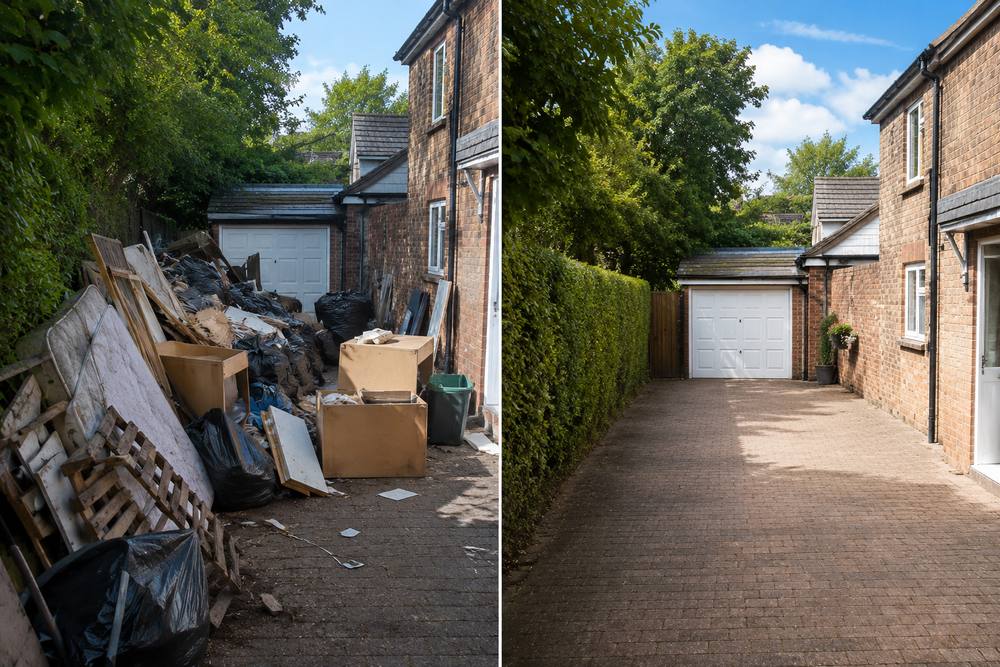


Quick Answer: Arranging a commercial warehouse clearance starts with assessing the premises, listing items, separating reusable goods from waste, booking an authorised contractor, planning safe access, and documenting hazardous materials before collection.
Businesses often need commercial warehouse clearance when relocating, closing, downsizing, ending a lease or preparing for refurbishment. The work may involve unwanted stock, pallet racking, machinery, packaging and accumulated waste. Restricted access, ongoing operations and fixed handover dates can complicate removal. Planning the clearance carefully helps organise collection, arrange specialist dismantling where needed and leave the warehouse ready for handover.
Key Takeaways
- Set the clearance date around your lease expiry, relocation or refurbishment deadline.
- List which stock, pallets, racking and machinery must stay, move, be sold or be removed.
- Confirm loading access, dismantling needs and hazardous materials before booking a contractor.
- Use a registered waste carrier, keep required waste documentation and inspect the warehouse before handover.
What Needs to Be Considered Before Clearing a Warehouse?
You need to start by deciding what needs to go and what must stay. Make a list of unwanted stock, pallets, machinery, shelving and office equipment. Mark anything that should be sold, moved to another site or kept in the warehouse.
Next, check whether heavy machinery, pallet racking or fixed equipment needs dismantling. Identify any suspected hazardous materials before work begins. Make sure clearance vehicles can reach the loading bays and that removal work will not disrupt staff or forklifts still using the site.
Finally, set a clearance date that leaves enough time before your lease ends, relocation begins or refurbishment starts.
How to Arrange a Warehouse Clearance (Step by Step)
A warehouse clearance is easier to organise when you establish the work required first, then coordinate removal, transport and handover in the right order.
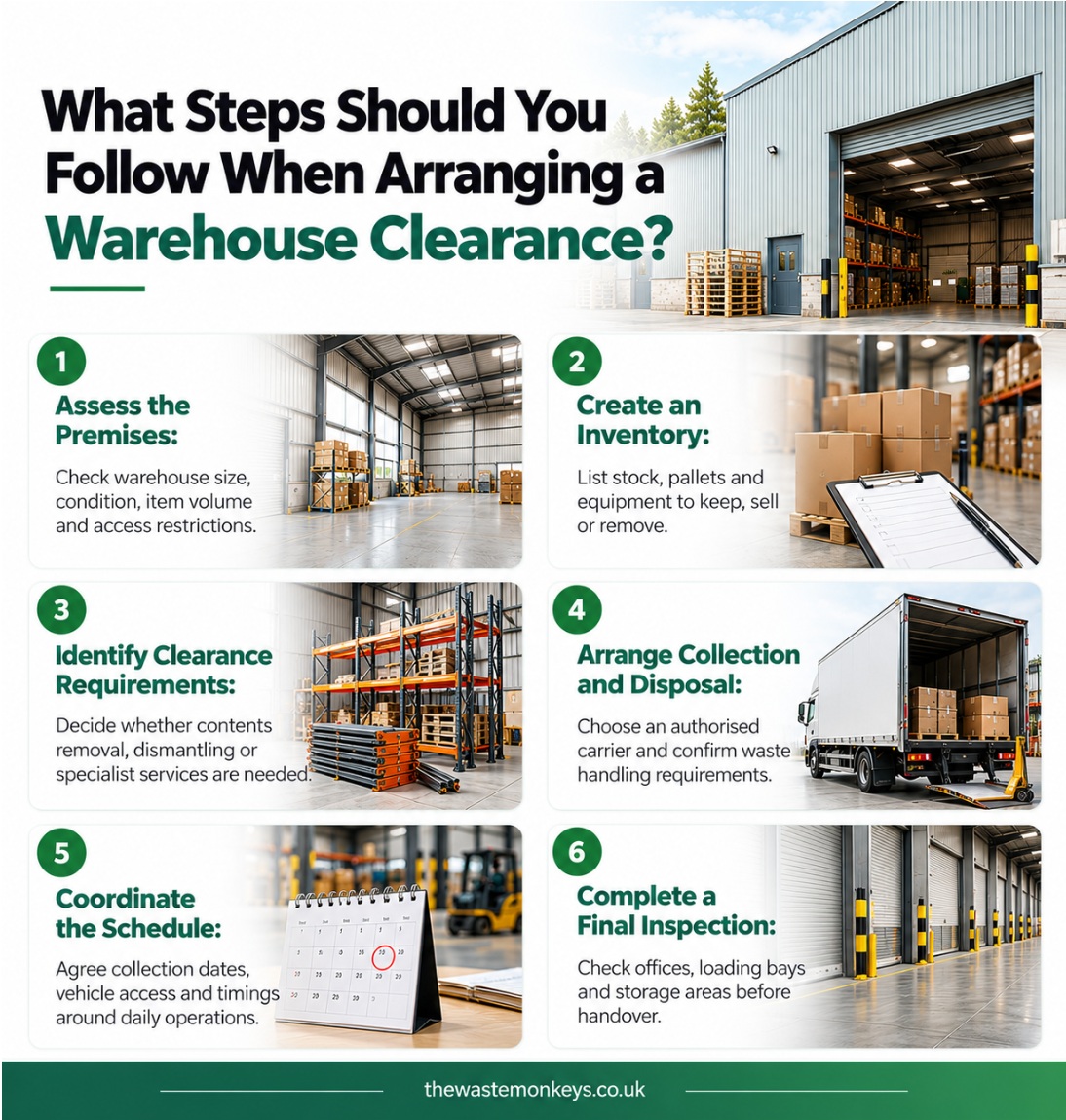
Follow these steps to organise the clearance:
Assess the Size and Condition of the Premises
Consider the warehouse’s size, the volume of items and the condition of the site. Photographs, an inventory or a site visit can help establish the work involved, including access restrictions and heavy equipment.
Create an Inventory of Unwanted Items
List what needs to stay, move, be sold or be removed. Include stock, pallets, racking, machinery, packaging and office equipment. Flag heavy, fragile or potentially hazardous items for separate assessment.
Determine the Required Clearance Services
Decide whether you need routine contents removal, racking dismantling, machinery removal or a commercial strip-out. Structural alterations and demolition may require separate arrangements and specialist contractors.
Arrange Collection and Waste Disposal
Agree the items being removed, collection arrangements, waste streams and required paperwork. In England, you can check a registered waste carrier through the Environment Agency’s public register. Elsewhere in the UK, check the relevant regulator.
Our commercial waste collection service covers warehouses and other business premises.
Coordinate the Clearance Schedule
Agree collection dates, arrival times, vehicle access and the order in which areas will be cleared. Coordinate with staff, relocation teams and other contractors to minimise disruption.
Complete a Final Property Inspection
Check the warehouse, offices, storage areas and loading zones. Confirm that all agreed items have been removed and any fixtures meant to remain are undisturbed before handover.
What Can a Professional Warehouse Clearance Company Remove?
Depending on the agreed service, a warehouse clearance company may remove:
- Pallet racking, shelving and storage cages
- Surplus stock, obsolete goods and damaged products
- Wooden pallets, cardboard and plastic wrapping
- Office desks, chairs, filing cabinets, computers and monitors
- Broken pallets, packaging and general non-hazardous rubbish
- Unwanted partitions, fixtures and redundant installations
Reusable or saleable items should be separated from waste wherever practical. Electrical equipment may require appropriate WEEE handling rather than disposal in a general skip. Heavy racking and fixed fixtures can also need competent dismantling.
Where the work involves removing internal fixtures or preparing the building for refurbishment, our commercial strip-out services may be more suitable than a contents-only clearance.
How Much Does Warehouse Clearance Cost?
Warehouse clearance costs depend on the volume and weight of materials, the size of the premises and the work required. Clearing loose packaging and unwanted stock can involve less labour than dismantling pallet racking or removing heavy machinery.
Other factors include:
- Loading access
- Transport distances
- Waste disposal charges
- And the handling requirements for different materials
Restricted access, tight deadlines and large clearance volumes can also affect the quotation.
Ask for an itemised quote based on a site assessment and agreed scope of work. This makes it easier to understand which services are included and whether specialist removal or additional disposal charges apply.
What Happens to Waste After a Warehouse Clearance?
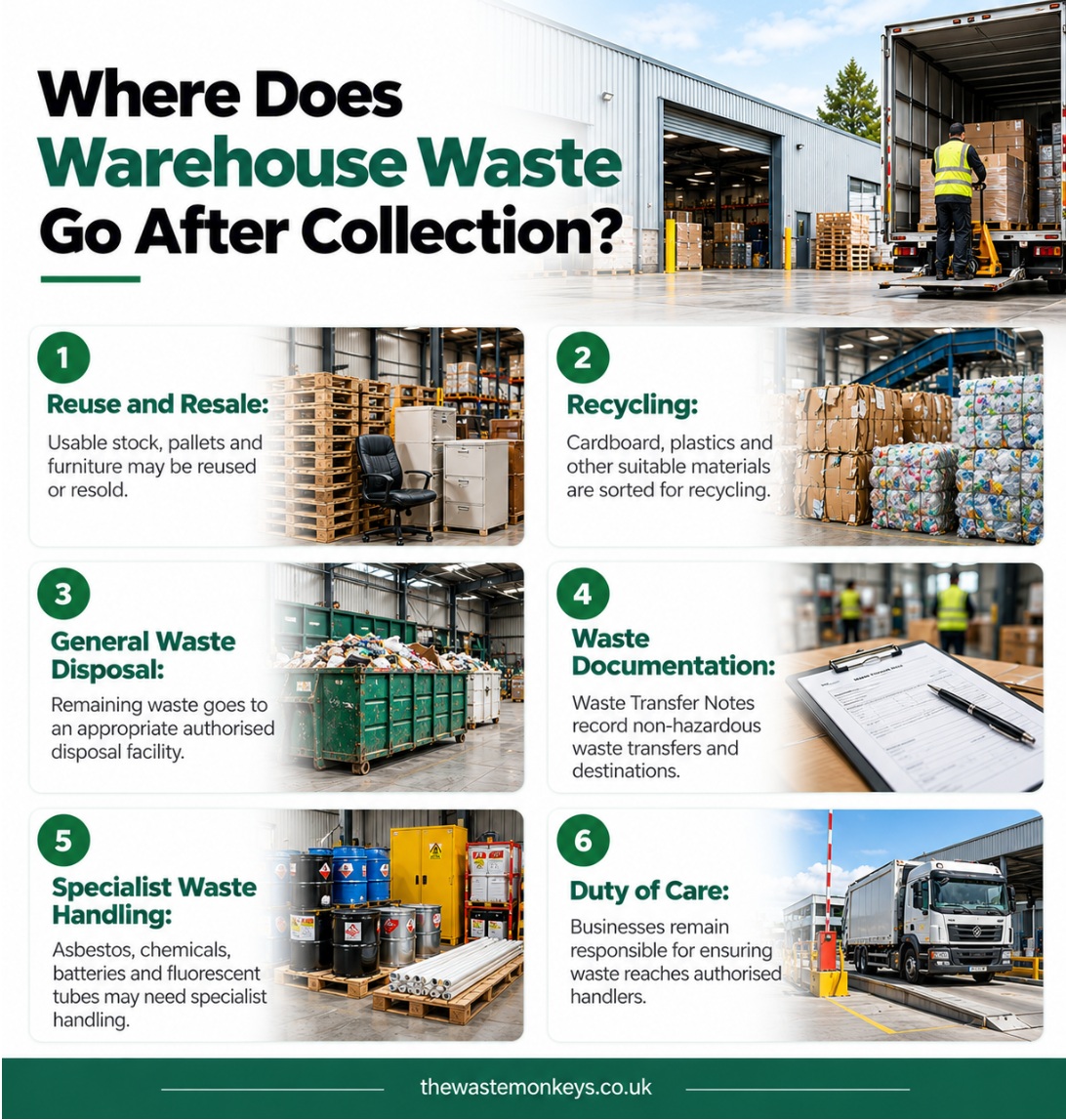
After collection, suitable materials should be directed towards reuse or recycling where practical. Remaining waste must go through appropriate disposal routes, with the required documentation kept for each transfer.
Reuse and Recycling of Suitable Materials
Start by separating usable stock, pallets and furniture from damaged goods and general waste. Items in good condition may be reused or resold. Cardboard, plastics and other suitable materials can be sorted for recycling.
This approach also reflects research into warehouse waste reduction. A Cardiff University study on material waste in distribution warehouses examines how structured material management can reduce waste through lean and circular-economy methods.
Sorting items before collection helps identify what can be recovered and what needs disposal.
Responsible Disposal of Non-Recyclable Waste
Waste that cannot be reused or recycled must go to an appropriate authorised disposal facility. Businesses remain responsible for how their waste is handled. Under Section 34 of the Environmental Protection Act 1990, they must prevent waste from escaping and only transfer it to an authorised person. Hiring a contractor does not remove this duty of care.
Waste separation also matters. In England, workplaces with 10 or more full-time-equivalent employees must separate dry recyclables and food waste. WRAP’s guidance for private waste and recycling service providers explains how collectors should support these requirements. Microbusinesses must comply from 31 March 2027.
Waste Transfer Notes and Documentation
In England and Wales, transfers of non-hazardous commercial waste must be accompanied by a Waste Transfer Note. It records the waste description and transfer details, along with confirmation that the waste hierarchy has been considered. Records generally need to be kept for two years.
Hazardous waste movements require consignment notes instead. Keep the relevant paperwork as evidence of how waste left the site and where it was transferred.
Specialist Handling of Hazardous Materials
Older warehouses may contain asbestos, chemical residues, batteries or fluorescent tubes. These materials can require separate handling and authorised disposal routes.
Suspected asbestos needs suitable assessment before intrusive work begins. Where asbestos requires removal, specialist arrangements must be made in line with the applicable rules. Ordinary clearance staff may not be qualified or authorised to carry out this work.
How Can You Prepare a Warehouse for Final Handover?
Before returning a leased warehouse, transferring ownership or handing the property over for refurbishment, check the requirements in the lease or handover agreement. These should clarify which fixtures must remain and the condition expected at the end.
The final walkthrough should confirm removal of:
- Unwanted stock
- Empty packaging
- General rubbish
- Redundant equipment
- Items left in storage areas
Check the warehouse, offices, loading bays and external storage before handing over the premises. Keep retained stock and fixtures clearly separated to avoid accidental removal.
Confirm that all agreed work is complete before the handover date. Finding missed areas or unwanted materials at this stage can cause delays and lead to additional clearance costs.
FAQs
How Long Does Warehouse Clearance Take?
It depends on the warehouse size, volume of materials, access and whether specialist dismantling is needed.
Can a Warehouse Be Cleared While the Business Is Still Operating?
Yes, provided the work is planned around operations and staff, vehicles and clearance teams can work safely.
Can Warehouse Clearance Be Carried Out Outside Normal Working Hours?
Yes, subject to contractor availability, site access, staffing and any restrictions on out-of-hours work.
Can a Warehouse Clearance Company Work to a Fixed Lease Expiry Date?
Yes. Agree the scope and schedule early, allowing time for specialist work and the final inspection.
Can Warehouse Clearance Be Arranged at Short Notice?
Sometimes, depending on the clearance volume, site access, contractor availability and any specialist handling required.
Who Is Responsible for Warehouse Waste Disposal, the Tenant or Landlord?
The lease determines each party’s contractual duties, but businesses producing or holding waste generally retain legal duty-of-care responsibilities when transferring it to a contractor.
Conclusion
A successful commercial warehouse clearance starts with a clear inventory, safe access, the right contractor and a realistic schedule. Specialist dismantling or hazardous materials may need separate arrangements. Plan the work around the handover deadline and confirm that all agreed items have been removed before returning to the premises.
Contact us to get a free quote today.