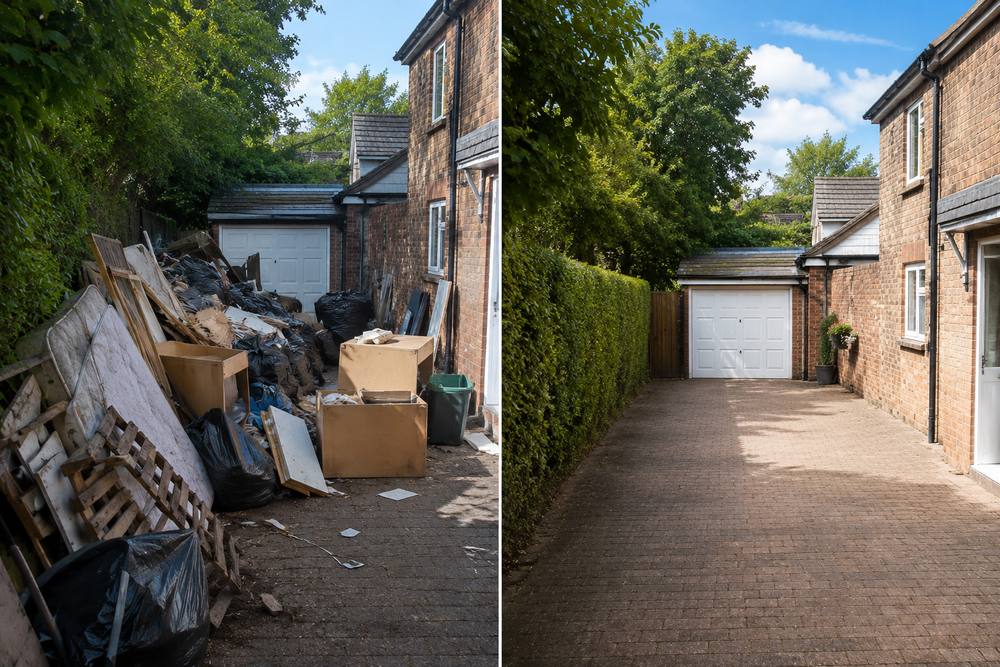

Quick Answer: Rubbish removal cost usually depends on the volume and type of waste, access to the property, labour involved and disposal charges. Local prices can vary, so quotes differ between jobs.
The rubbish removal cost for a UK job can vary widely, even when the amount of waste looks similar. A few pieces of furniture cost far less to remove than a full house clearance. The type of waste also affects disposal costs. Difficult access can add to labour time and charges. Knowing these factors helps you understand what you may pay.
Key Takeaways
- Waste volume affects vehicle space, loading time and disposal costs.
- Waste type can change how much processing or disposal costs.
- Restricted access can increase the labour needed to clear everything.
- Disposal taxes and licensed waste costs are built into legitimate quotes.
How Is Rubbish Removal Priced?
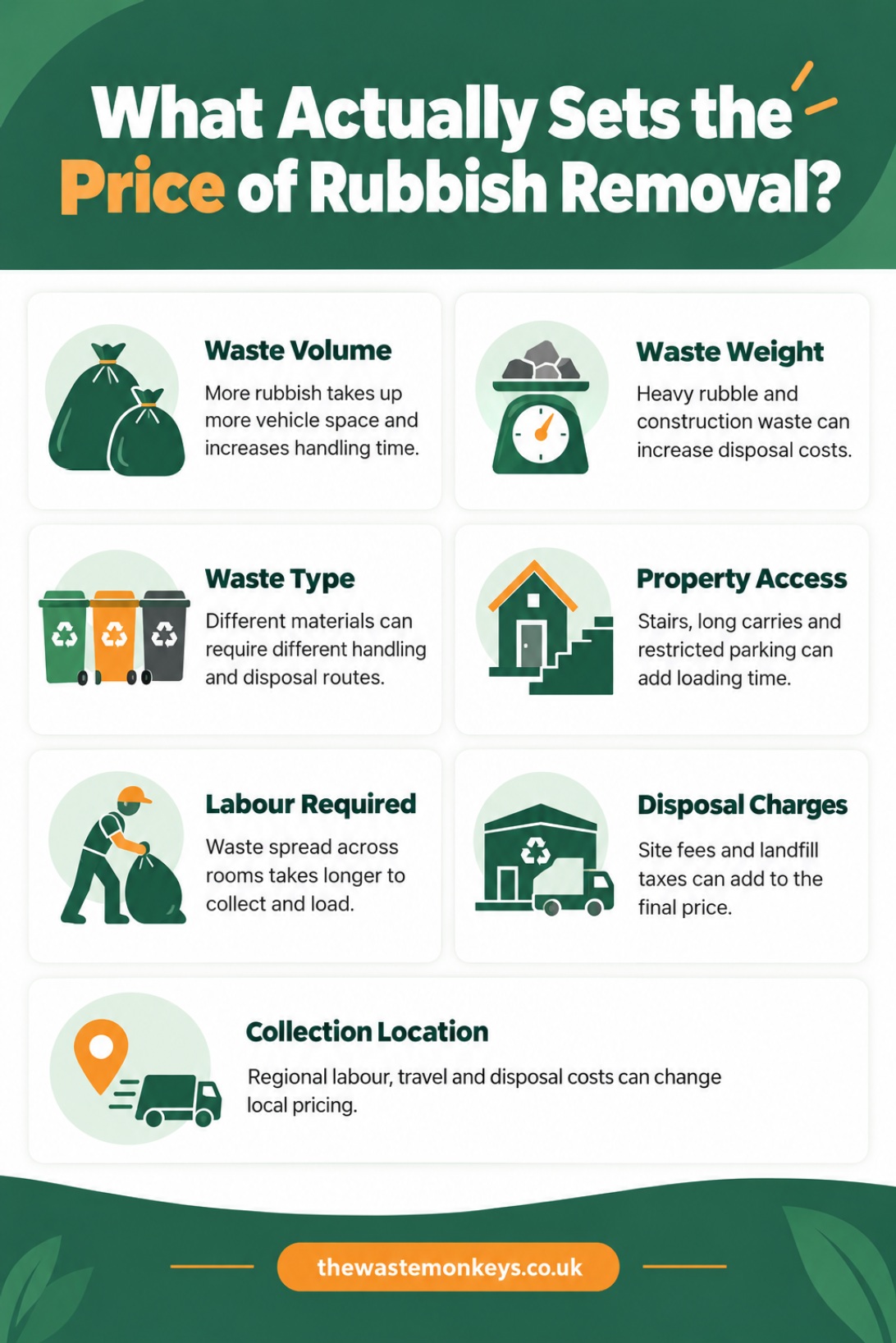
Most UK rubbish removal quotes are based on a combination of factors rather than one standard price. The amount of waste gives the provider an idea of the vehicle space and handling time required, while the type of material affects where and how it can be processed.
Volume and Weight
The amount of waste is usually one of the biggest influences on the price. A few bags or one bulky item take up far less vehicle space than several rooms of furniture, boxes and general household rubbish.
Providers may assess the job by van load, volume, weight or collection size. Heavy materials can push the price up too. Rubble and construction waste become expensive when the weight adds up quickly.
Waste Type
Waste type affects the route it takes after collection. General household waste, bulky furniture, garden waste and construction debris can have different handling, recycling and disposal requirements.
Some materials also carry higher disposal costs than others. A collection containing heavy rubble, for example, can be priced differently from a similar sized load of lighter household items.
Access and Location
The easier the waste is to reach, the quicker it can usually be loaded. Stairs, long carry distances, narrow access routes or limited parking can add time to the job and increase labour requirements.
Mention these details when asking for a quote. A provider can then price the work around the actual access conditions rather than making assumptions.
Labour
Labour covers the time needed to collect, carry, load and remove the waste. A pile of rubbish waiting outside the property can be cleared far quicker than waste spread across several rooms or stored upstairs.
That means two collections with a similar volume can still have different prices when the amount of handling involved is different.
Disposal Fees
The waste still has to go somewhere after it leaves your property, and legitimate removal companies pay to dispose of it through the appropriate route. Disposal charges can include site fees and taxes, with some waste attracting higher charges according to how it is classified.
From 1 April 2026, the standard rate of Landfill Tax in England increased to £130.75 per tonne, up from £126.15 the previous year. The current UK Landfill Tax rates show the latest rates and the previous year’s figures.
What Affects the Cost of Rubbish Removal?
The collection itself can range from a single bulky item to a full property clearance. Once the scope of the job changes, the amount of labour, vehicle space and disposal involved can change with it.
Type of Job (Single Item vs Full Clearance)
A single item collection usually involves far less work than clearing an entire property. One sofa or appliance may need a short collection, while a house clearance can involve furniture, bags, boxes and household contents spread across several rooms.
For larger jobs, a dedicated house clearance service can be more appropriate because the work extends beyond collecting a few individual items.
Timing and Availability
Booking a collection in advance gives the provider more flexibility around vehicles and staff. Same day or urgent bookings can sometimes cost more when the job needs to be fitted into an already busy schedule.
Regional Variation
Rubbish removal prices can vary between parts of the UK because labour rates, travel distances and local disposal charges differ. A provider working regularly in your area can usually give a more useful estimate than a generic national figure.
Why Do Rubbish Removal Prices Vary So Much?
Rubbish removal prices can look very different because a legitimate provider has to cover the full cost of collecting, transporting and disposing of your waste legally. The waste itself is only part of what you are paying for.
In England, businesses that transport other people’s waste as part of their business generally need to register with the Environment Agency as a waste carrier. According to waste carrier registration requirements, an upper tier registration currently costs £191.02, with renewal required every three years at £130.25.
There are also vehicle, labour, insurance and disposal costs to cover. This is why an unusually cheap quote deserves a closer look. Cutting corners on disposal can lead to fly tipping, which leaves waste in the wrong place and can create problems for the person who produced it.
Householders also have a duty to take reasonable steps when handing waste to another person. Guidance on householder duty of care for waste stresses the importance of using an authorised waste carrier.
Our waste removal service provides licensed collection with responsible disposal, so you know who is handling your waste and where it is going.
Can You Reduce Your Rubbish Removal Costs?
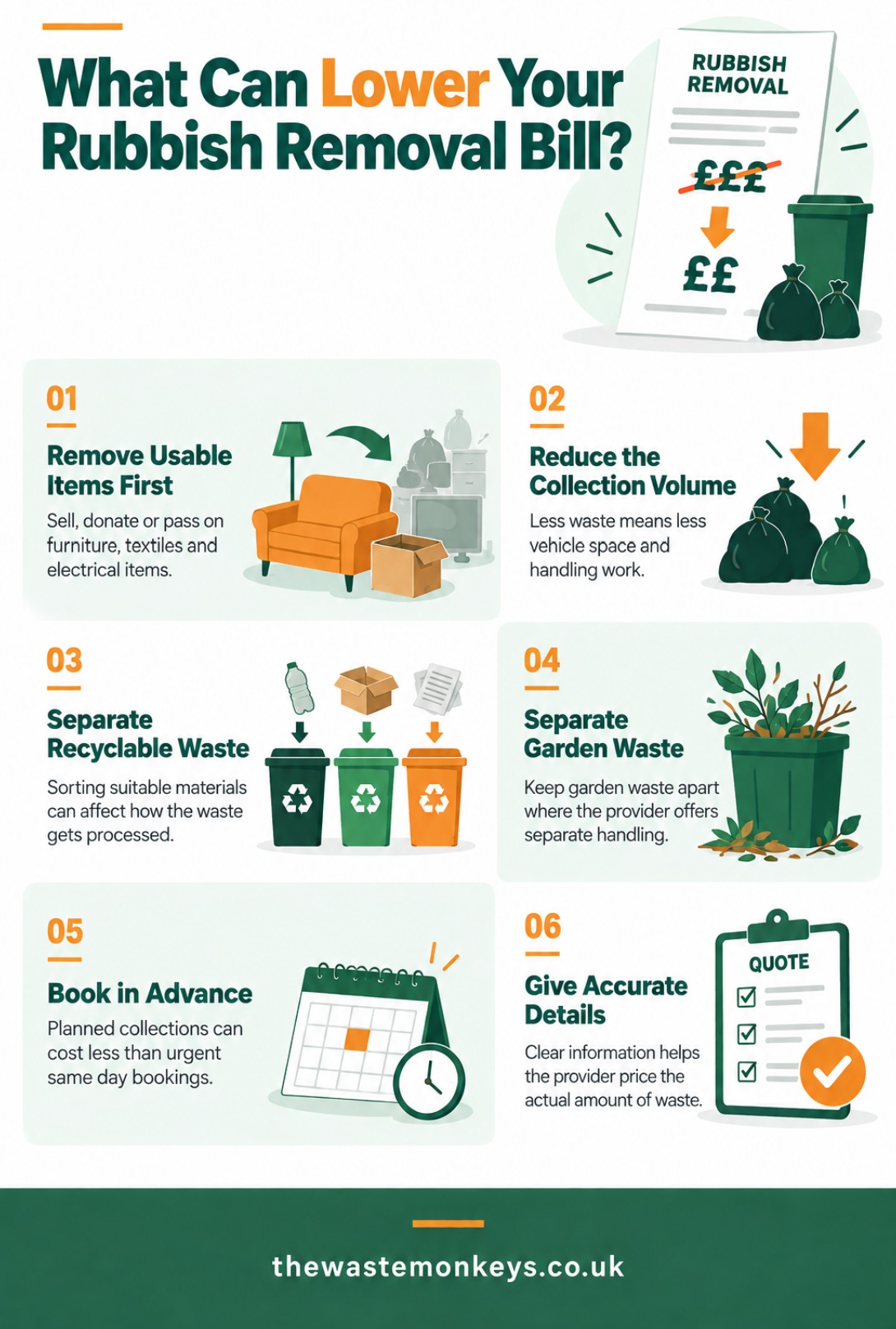
Yes. One of the simplest ways to bring the cost down is to reduce the amount of waste that needs collecting in the first place.
Furniture, textiles and electrical items that are still usable may be better donated, sold or passed on. WRAP research into bulky household waste found that a significant proportion of collected furniture, textiles and electrical items could have been suitable for reuse.
Separating recyclable materials or garden waste can also affect how waste is processed, depending on what the provider accepts. Planning the collection in advance can help too, particularly when compared with requesting an urgent same day service.
Are Rubbish Removal Prices Rising?
Yes, rubbish removal prices have been trending upwards, with collection, treatment and disposal costs all contributing to higher charges. The rise is also reflected in official UK price data, while increases in disposal costs can feed directly into what customers pay.
The ONS waste sector price index tracks prices for waste collection, treatment and disposal services across the UK. It provides a useful measure of how costs in the sector have changed over time.
Landfill Tax has also increased for 2026. The standard rate rose from £126.15 to £130.75 per tonne from 1 April, adding another disposal cost where landfill is used.
That means a rubbish removal quote today may cost more than a similar job completed several years ago. The difference can come from several parts of the service, rather than the collection itself.
FAQs
How much does rubbish removal cost in the UK?
There is no single UK price. The final cost depends on waste volume, type, access, labour, disposal charges and location.
Why do rubbish removal prices vary so much?
Different jobs involve different amounts of labour, vehicle space and disposal. Local operating costs can also change the final price.
Is it cheaper to hire a skip or use rubbish removal?
It depends on the amount and type of waste. Rubbish removal can work well for smaller collections, while a skip may suit larger projects.
Does rubbish removal cost include disposal fees?
Often, but check the quote carefully. Disposal charges, taxes and specialist waste costs may be included within the quoted price or listed separately.
Can I get a fixed price for rubbish removal?
Many providers can offer a fixed price once they know the waste volume, type, access and collection requirements.
How can I reduce the cost of rubbish removal?
Donate or reuse suitable items, separate materials where practical and avoid unnecessary urgent collections. Accurate information about the job can also help you receive a clearer quote.
Conclusion
Rubbish removal cost depends on the amount and type of waste, access, labour and disposal charges. Local conditions can affect the final figure too. A detailed quote based on your actual job is the best way to know what you will pay.
Want an accurate price for your rubbish removal job? Contact us for a free, no-obligation quote.