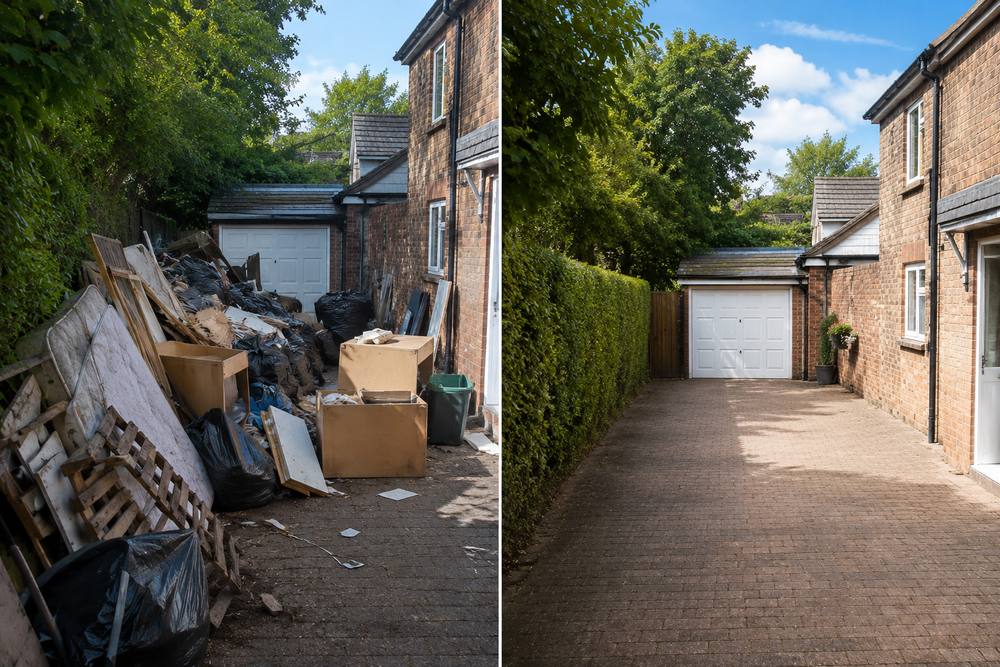
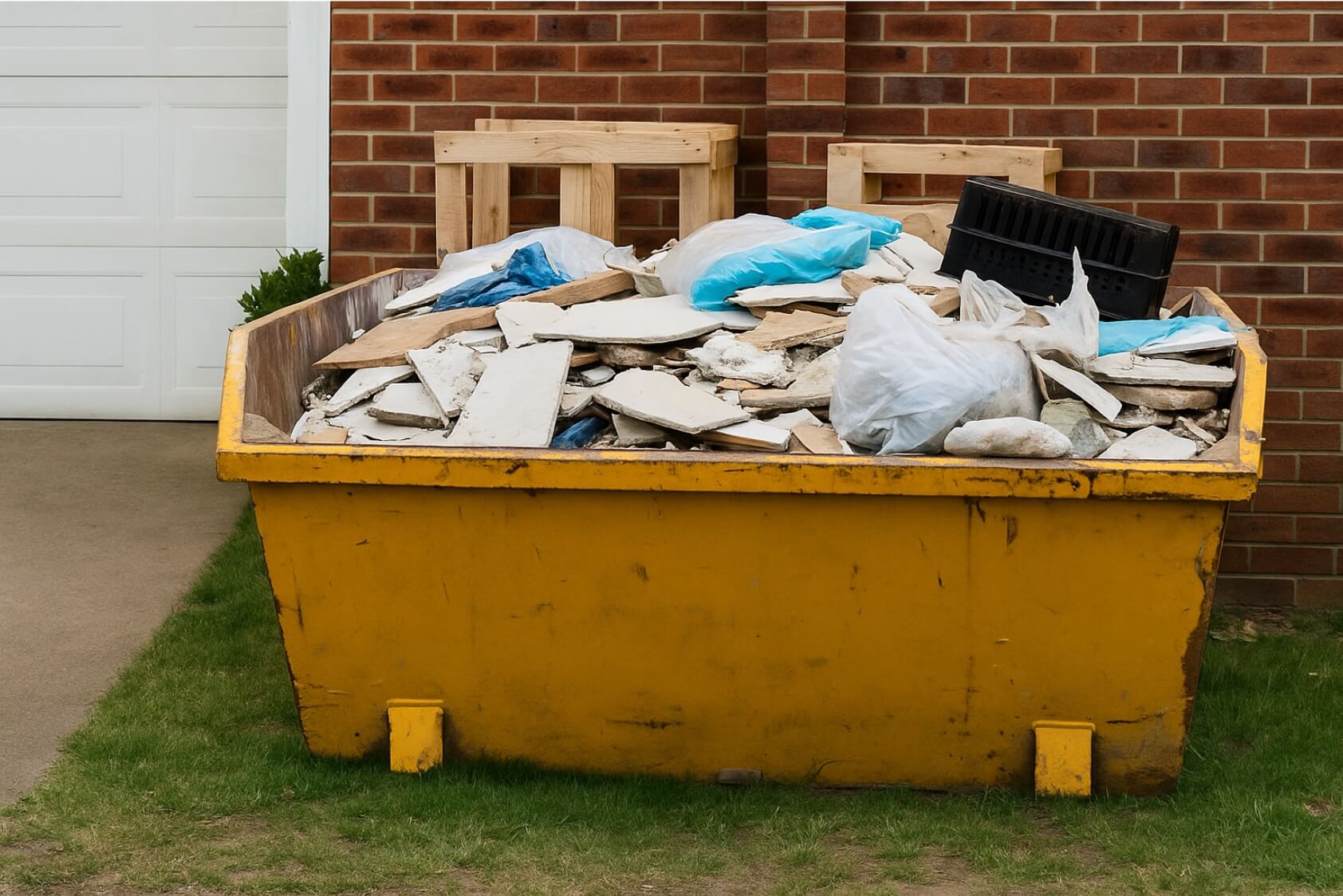
Skip sizes range from 2-yard mini skips for small projects to 35-yard industrial containers. Choose based on your project size, waste type, and space available. Remember weight restrictions apply and certain hazardous materials are prohibited.
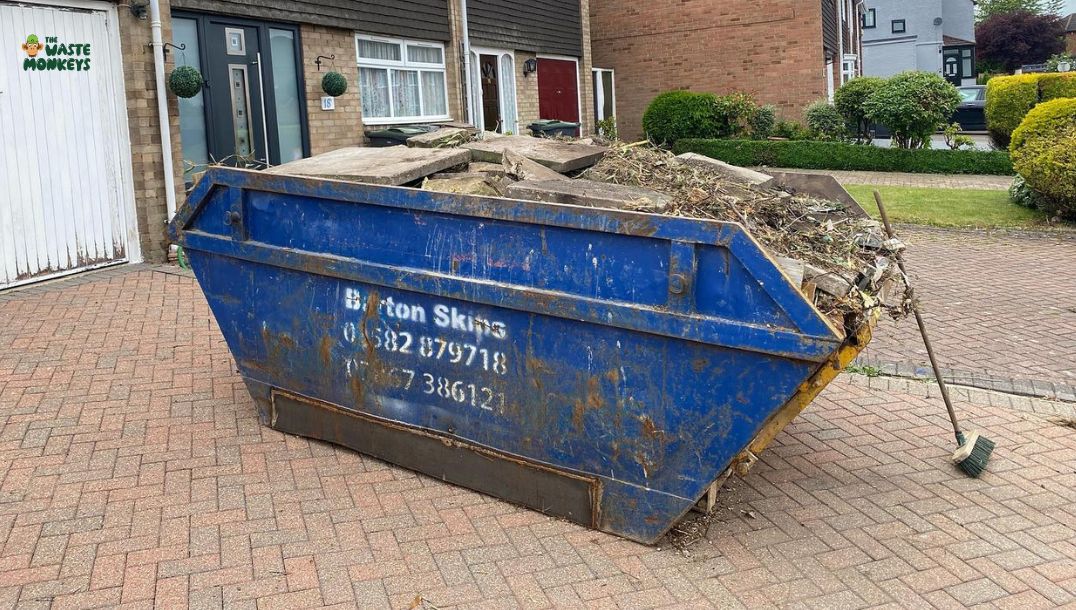
Hiring a skip shouldn’t be guesswork. Choose too small, and you’re stuck with leftover waste. Go too big, and you’re wasting money on unused space. This guide walks you through skip sizes from mini to mammoth, helping you pick the perfect match for your project and budget.
Key Takeaways
- Skip sizes are measured in cubic yards, with options ranging from 2-yard mini skips to 35-yard industrial containers suitable for different project scales.
- Consider both waste type and volume when choosing, heavy materials like soil and concrete require smaller skips due to weight restrictions.
- Hazardous materials including asbestos, electronics, batteries, and chemicals are prohibited in standard skips and require specialist disposal.
How Are Skips Measured?
Skips in the UK are typically measured in cubic yards (yd³), though you’ll often see cubic meters (m³) listed too. The standard sizes range from 2 yards up to 40 yards for the largest industrial containers.
Most domestic projects require skips up to 8 yards, while commercial and industrial jobs often need larger 12-40 yard options. The capacity is sometimes described in terms of “bin bag equivalents” to help visualize how much waste will fit.
When measuring skips, remember that you can’t fill them above the level of the sides. Overfilling isn’t just inefficient, it’s against regulations and can result in your skip not being collected.
Common UK Skip Sizes
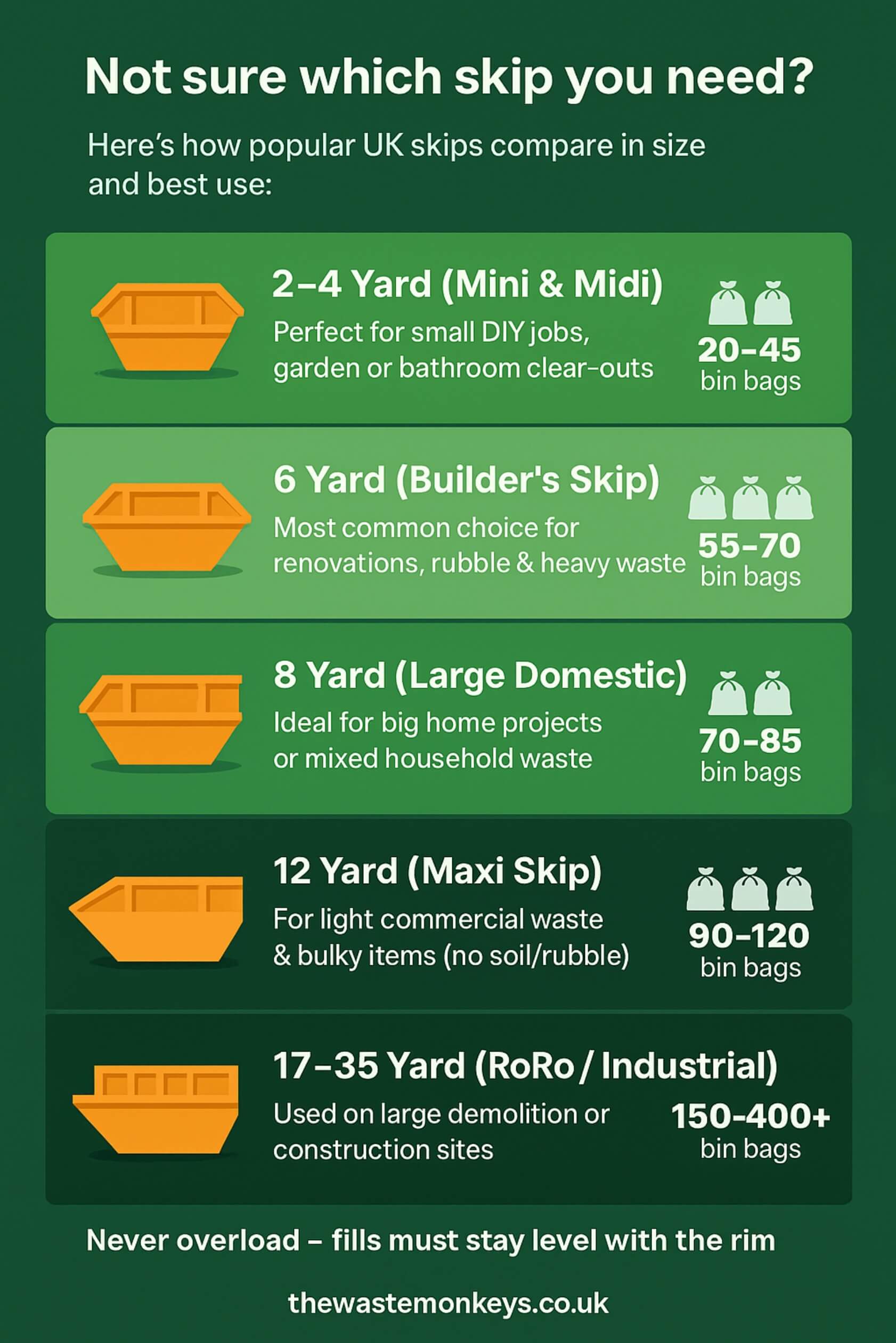
2-Yard Skip
The mini skip is perfect for small home projects and fits neatly in tight spaces.
| Feature | Specification |
|---|---|
| Volume | 2 yd³ (approximately 1.5 m³) |
| Dimensions | 1.2m (L) × 0.91m (W) × 0.76m (H) |
| Capacity | 20-30 bin bags |
| Ideal Uses | Small garden clearances, bathroom refits, kitchen cleanouts |
| Weight Limit | Typically up to 1 tonne |
Mini skips can fit in most driveways or small garden spaces. They’re popular for projects like clearing out a single room or tackling a modest garden tidy-up. Despite their small size, they can handle surprising amounts of waste when packed efficiently.
4-Yard Skip
The midi skip offers double the capacity of a mini skip while still fitting in most residential spaces.
| Feature | Specification |
|---|---|
| Volume | 4 yd³ (approximately 3 m³) |
| Dimensions | 1.83m (L) × 1.29m (W) × 0.97m (H) |
| Capacity | 35-45 bin bags |
| Ideal Uses | Bathroom renovations, kitchen refits, garden clearances |
| Weight Limit | Typically 1-2 tonnes |
These versatile skips are perfect for moderate home renovations. They can handle most household waste including furniture pieces, garden waste, and small amounts of construction debris. The 4-yard skip strikes a good balance between capacity and space requirements.
6-Yard Skip
The classic builder’s skip is the most commonly hired size in the UK, offering substantial capacity for most projects.
| Feature | Specification |
|---|---|
| Volume | 6 yd³ (approximately 4.6 m³) |
| Dimensions | 2.6m (L) × 1.52m (W) × 1.22m (H) |
| Capacity | 55-70 bin bags |
| Ideal Uses | Home renovations, heavy waste (soil/rubble), building projects |
| Weight Limit | Typically 6-8 tonnes |
This skip is the workhorse of the construction industry. It’s large enough to handle serious home renovations but not so big that it’s unwieldy. The builder’s skip can accommodate heavy materials like soil, concrete, and bricks, making it perfect for construction projects.
If you’re doing substantial work on your property, this is likely your go-to option. Its popularity means it’s readily available from most skip hire companies.
8-Yard Skip
When projects scale up, the 8-yard skip provides significant capacity for larger renovation works.
| Feature | Specification |
|---|---|
| Volume | 8 yd³ (approximately 6.1 m³) |
| Dimensions | 3.66m (L) × 1.68m (W) × 1.22m (H) |
| Capacity | 70-85 bin bags |
| Ideal Uses | Major home renovations, large clearances, mixed waste |
| Weight Limit | Varies by provider, but usually limited for heavy materials |
The 8-yard skip is typically the largest skip recommended for domestic use. It’s ideal for major house clearances or substantial renovation projects. While these skips can handle larger volumes, there are often weight restrictions, especially for heavy waste like soil and rubble.
For projects generating mostly light but bulky waste, this size offers excellent value.
12-Yard Skip
Moving into commercial territory, the 12-yard skip provides substantial capacity for larger projects.
| Feature | Specification |
|---|---|
| Volume | 12 yd³ (approximately 9.2 m³) |
| Dimensions | 3.7m (L) × 1.78m (W) × 1.68m (H) |
| Capacity | 90-120 bin bags |
| Ideal Uses | House clearances, light commercial waste, bulky items |
| Weight Limit | Restricted to lighter waste only |
These larger skips are designed primarily for light, bulky waste rather than dense materials. They’re commonly used for complete house clearances, shop fitting waste, and similar projects where volume rather than weight is the main concern.
Due to transport regulations and vehicle capacity limitations, 12-yard skips typically can’t be filled with heavy construction materials like soil, concrete, or bricks.
17-Yard Skip
The 17-yard skip bridges the gap between standard skips and industrial containers.
| Feature | Specification |
|---|---|
| Volume | 17 yd³ (approximately 13 m³) |
| Dimensions | 6.09m (L) × 2.44m (W) × 1.81m (H) |
| Capacity | 150-200 bin bags |
| Ideal Uses | Commercial sites, large clearances, demolition projects |
| Access Requirements | Needs significant space for delivery and collection |
These large skips are typically Roll-On/Roll-Off (RoRo) designs and require substantial space for delivery and collection. They’re rarely used for domestic projects but are common on commercial sites with large volumes of waste.
The 17-yard skip is ideal for significant clearance operations, large renovation projects, and commercial work generating substantial waste volumes.
35-Yard Skip
For the largest commercial and industrial projects, the 35-yard skip offers maximum capacity.
| Feature | Specification |
|---|---|
| Volume | 35 yd³ (approximately 27 m³) |
| Dimensions | 6.09m (L) × 2.44m (W) × 2.1m (H) |
| Capacity | 300-400 bin bags |
| Ideal Uses | Major commercial operations, industrial sites, large demolitions |
| Site Requirements | Requires substantial space and suitable access |
These industrial-sized containers are exclusively for major commercial operations. They require significant space and appropriate access for delivery and collection vehicles. The 35-yard skip is designed for projects generating enormous waste volumes, such as large-scale demolitions or major construction sites.
Due to their size, these skips are typically only available on a commercial basis and require advance planning for delivery and placement.
What You Can Put in a Skip
Allowed Waste
Most skips can accept a wide range of non-hazardous waste materials:
- General household waste (excluding electrical items)
- Garden waste including soil, turf, branches, and leaves
- Construction debris like bricks, concrete, and tiles
- Wood, metals, and plastics
- Furniture (with some restrictions on upholstered items)
- Packaging materials
The recovery rate for non-hazardous construction waste in England stands at approximately 94%, so proper waste segregation significantly helps recycling efforts.
When filling your skip, keep materials secure and below the level of the sides. Many skip hire permits require waste to be netted or sheeted during transit to prevent spillage.
Prohibited Waste
UK regulations strictly prohibit certain materials from general skips:
- Asbestos (requires specialist handling by licensed contractors)
- Electrical items including TVs, fridges, and microwaves (covered by WEEE regulations)
- Batteries, paints, oils, and chemicals (classified as hazardous waste)
- Gas cylinders and pressurized containers
- Plasterboard (must be separated from biodegradable waste)
- Tyres and automotive parts
- Medical waste
- Upholstered furniture containing POPs (Persistent Organic Pollutants)
Many of these restricted items require specific disposal routes through specialized waste handlers. Placing prohibited items in a general skip is against regulations and can result in additional charges or refusal to collect the skip.
For items like plasterboard, many skip hire companies offer dedicated containers to ensure proper disposal.
Tips for Choosing the Right Skip Size
Selecting the perfect skip size comes down to a few practical considerations:
First, assess your project honestly. A bathroom renovation typically needs a 4-yard skip, while a full house clearance might require an 8 or 12-yard option.
Consider the type of waste you’ll generate. Heavy materials like soil, concrete, and bricks need smaller skips (6-8 yards maximum) to prevent overloading, while lighter waste can go in larger containers.
Look at your available space. Measure the area where you plan to place the skip, allowing for access around it. Remember that larger skips need more room not just for the container itself but also for the delivery vehicle.
Think about access to your property. If space is tight or the skip needs to go on a public road, you’ll need to arrange a permit from your local council.
When in doubt, go one size up rather than risk needing a second skip. Most people underestimate the amount of waste their project will generate.
For mixed waste types, consider segregating materials that require special handling. Items like plasterboard, electrical goods, and certain upholstered furniture need separate disposal routes.
Need the right skip for your project? We deliver, collect, and manage skips of all sizes across Hertfordshire, Bedfordshire, Buckinghamshire, and North London. Hire your skip today.
Why Choosing the Right Skip Size Matters
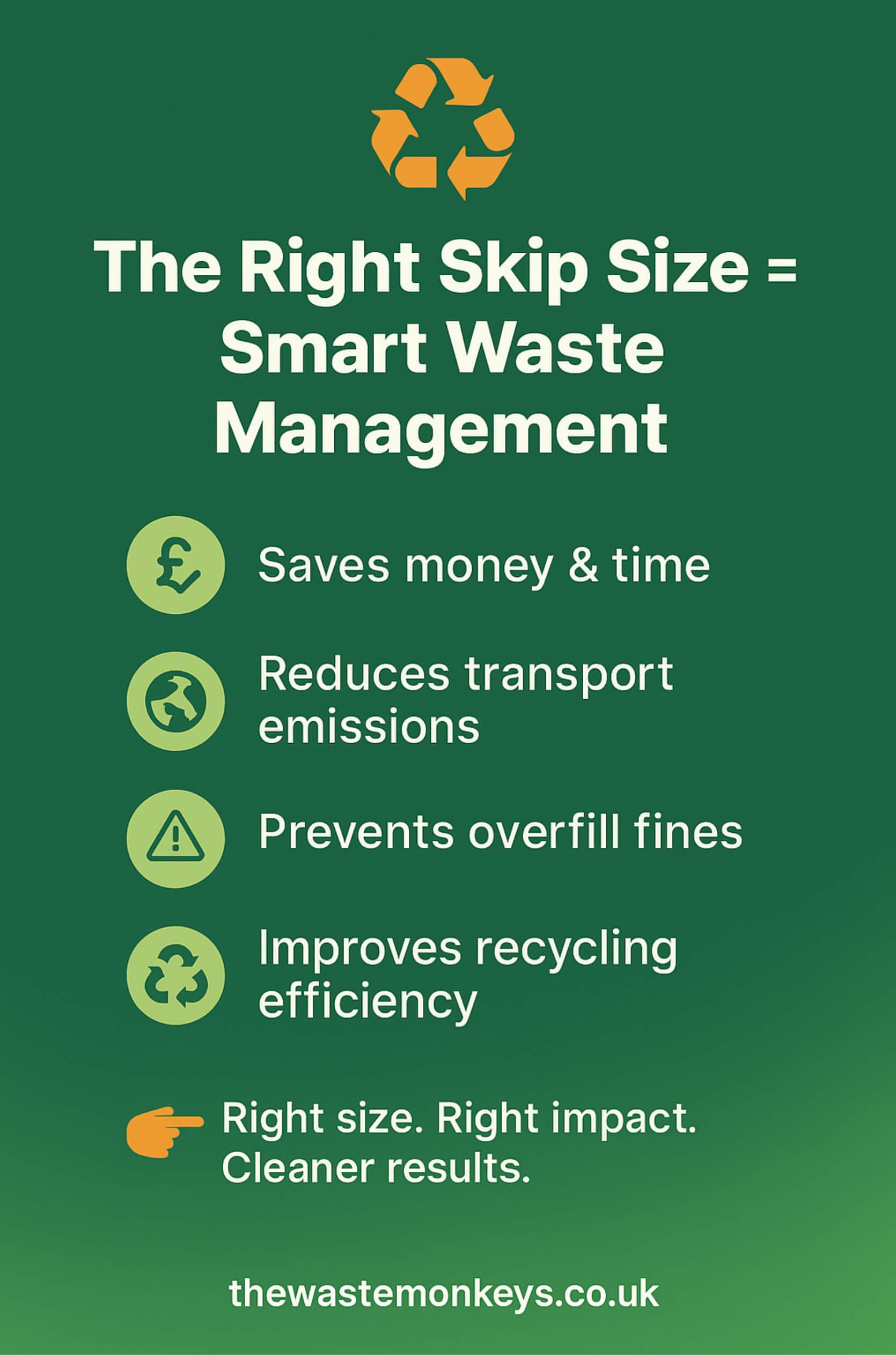
Getting your skip size right impacts more than just convenience. It affects your project’s budget, timeline, and environmental footprint.
Choosing a skip that’s too small means you might need a second delivery, doubling your transport-related costs and carbon emissions. It also creates project delays while you wait for the full skip to be collected and a new one delivered.
On the flip side, an unnecessarily large skip wastes money and takes up valuable space on your property or worksite. Larger skips also require more consideration for placement, potentially needing permits if they must go on public roads.
The right size ensures you’re only paying for the capacity you need while minimizing disruption to your project flow.
From an environmental perspective, optimizing your skip size reduces transport emissions and supports better waste segregation, improving recycling rates and diverting more from landfill.
Conclusion
The perfect skip size depends on your specific project requirements, waste type, and location constraints. From mini skips for small garden clearances to industrial containers for major construction, the UK offers options for every need.
For expert advice on selecting the perfect skip for your specific needs, check out our comprehensive skip hire services or give us a call. We’ll help make your waste management stress-free from start to finish.
FAQs
What skip size is best for a complete house clearance?
For a typical house clearance, an 8-yard skip suits most needs. For larger properties or extensive renovations, consider a 12-yard skip for lighter waste. If clearing heavy materials like rubble, you might need multiple 6-yard skips to avoid exceeding weight limits.
Do I need a permit for skip placement, and how do I obtain one?
You need a permit when placing a skip on public roads, but not on private property. Apply through your local council (costs £20-50) or ask your skip hire company to arrange it for you. Permits typically take 2-3 working days to process.
How long can I keep a skip on my property or on the road?
Most skip hire periods run for 1-2 weeks. Road placement permits usually last 7-14 days, though extensions are possible. For private property, longer rental periods can often be arranged with your skip provider for an additional fee.
Can I put garden waste and construction debris in the same skip?
Yes, garden waste and construction debris can generally go in the same skip, provided neither contains prohibited materials. However, for optimal recycling, some providers offer dedicated skips for specific waste streams. Heavy materials like soil should be limited in larger skips.
What happens to the waste after my skip is collected?
After collection, waste is transported to a sorting facility where recyclable materials are separated. Around 90% of skip waste is typically recycled or recovered. Materials like metals, wood, and hardcore are processed for reuse, while non-recyclables go to energy recovery or landfill as a last resort.
How do weight restrictions affect my skip hire choice?
Weight limits exist primarily for transport safety. Larger skips (12+ yards) are intended for lighter, bulky waste only. For heavy materials like soil, concrete, or bricks, stick to 6-8 yard skips maximum. Overloaded skips may incur additional charges or be refused collection.
What documentation should I expect from my skip hire company?
You should receive a waste transfer note detailing the waste types, collection date, and intended disposal route. If the skip contains hazardous waste, you’ll need a consignment note. Also confirm your provider has a valid waste carrier license, which you can verify on the Environment Agency’s website.