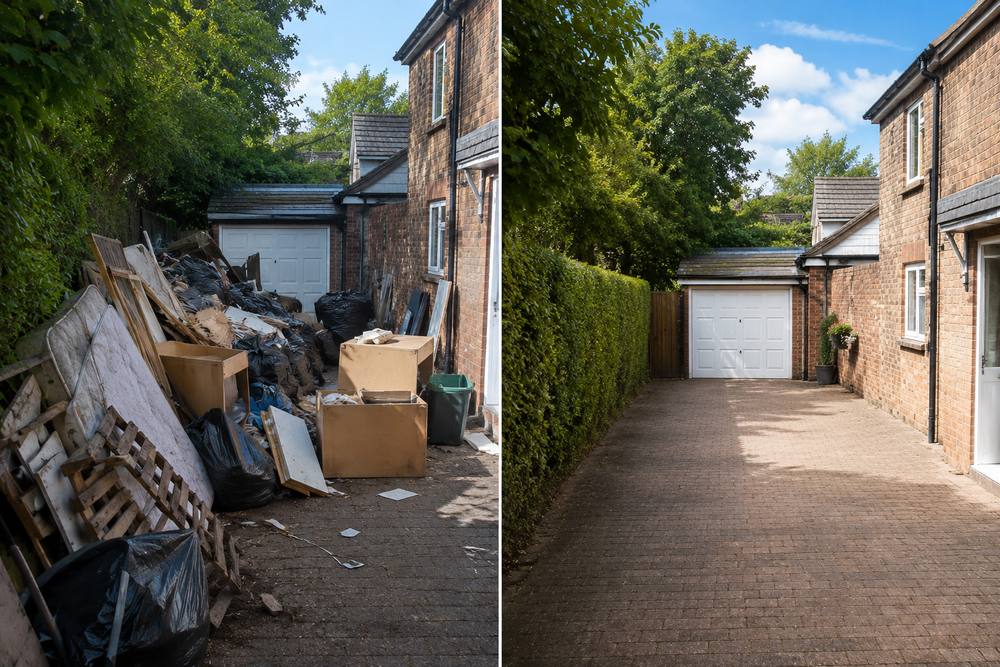
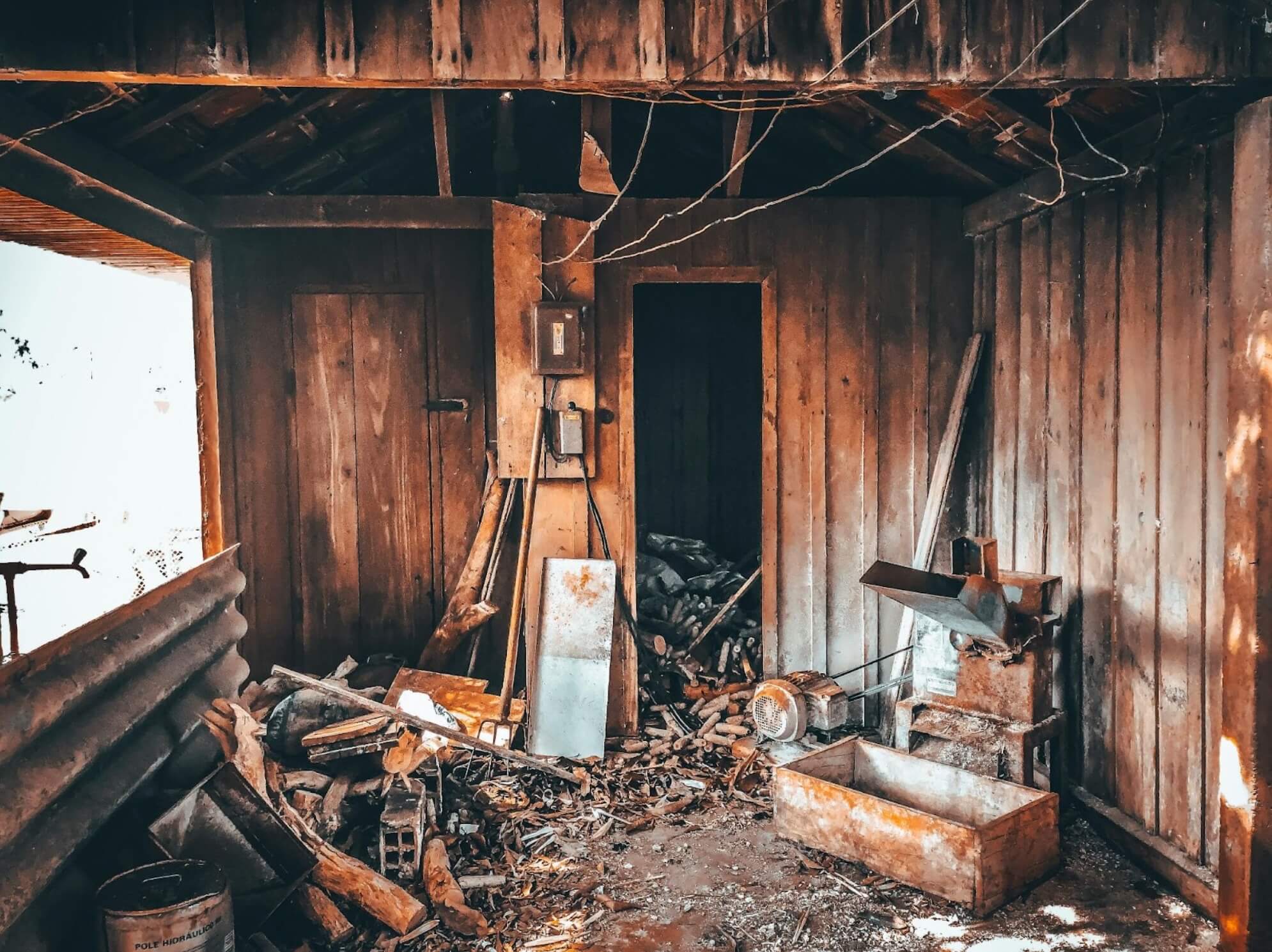
In the UK, outbuilding demolition typically doesn't require planning permission for structures under 50 cubic metres. However, permission is needed for larger buildings, listed properties, conservation areas, or when permitted development rights are restricted.
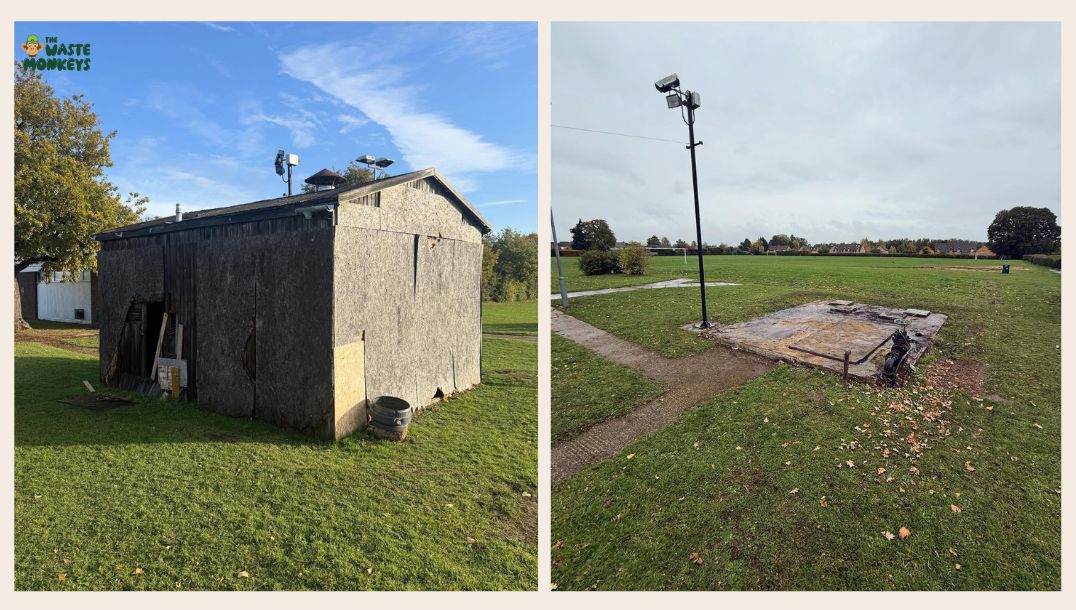
Planning to demolish that old garden shed or garage? Before you grab the sledgehammer, it’s worth knowing that UK planning law considers most demolition work as “development”, even for small outbuildings. While some small-scale demolitions don’t require formal permission, others definitely do, and getting it wrong can lead to enforcement action or legal issues down the line.
Key Takeaways
- Most small outbuildings under 50 cubic metres can be demolished without planning permission, though Building Act notifications are still required.
- Special rules apply to listed buildings, conservation areas, and protected lands where almost any demolition requires formal approval.
- Even when planning permission isn’t needed, other legal requirements like waste disposal regulations, asbestos handling, and party wall notices still apply.
What Counts as an Outbuilding in the UK?
In UK planning law, outbuildings are structures within the curtilage (boundaries) of a residential property that support the main dwelling. These typically include garden sheds, garages, greenhouses, garden offices, summer houses, and storage buildings.
These structures must be “ancillary” to the main house, meaning they support its function rather than serving as independent living accommodations. The key distinction is that outbuildings complement the primary residence but aren’t meant for permanent, independent habitation.
While planning rules vary slightly across England, Wales, Scotland, and Northern Ireland, this basic definition applies throughout the UK. Local planning authorities (LPAs) may have additional specific interpretations, so checking local guidance is always wise.
Do You Need Planning Permission to Demolish an Outbuilding?
The short answer is: sometimes. Whether you need planning permission depends on several factors, including the building’s size, location, and any special designations that might apply to your property.
When Demolition Is Allowed Without Permission
In England and Wales, you generally don’t need planning permission to demolish:
- Any building with a volume less than 50 cubic metres (measured externally)
- Any gate, fence, wall or similar boundary structure, regardless of size
This 50m³ threshold comes from the Town and Country Planning (Demolition – Description of Buildings) Direction 2021. For context, a typical single garage might be around 30-40m³, while a large double garage could exceed 50m³.
For example, removing a standard garden shed (around 15-20m³) or a small greenhouse outside a conservation area would typically not require planning permission.
| Structure | Approximate Volume | Permission Required? |
|---|---|---|
| Small shed (2.5m × 2m × 2.2m) | 11m³ | No |
| Single garage (5m × 3m × 2.5m) | 37.5m³ | No |
| Large double garage (7m × 6m × 2.5m) | 105m³ | Yes (or prior approval) |
When Planning Permission Is Required
You’ll typically need planning permission or prior approval in the following situations:

If your property has had its permitted development rights removed through an Article 4 Direction or planning condition, you may need permission regardless of the building’s size.
Permitted Development Rights for Outbuilding Demolition
For larger outbuildings outside conservation areas, demolition might still be possible without full planning permission thanks to Permitted Development Rights (PDRs).
Size and Height Limits Under UK Law
In England, demolition of structures over 50 cubic metres may fall under Part 11, Class B of the Town and Country Planning (General Permitted Development) Order 2015. This grants national permission for demolition subject to certain conditions.
However, you’ll typically need to apply to your local planning authority for “prior approval” regarding:
- The method of demolition (how the work will be carried out)
- The proposed restoration of the site afterwards (how you’ll make the ground safe)
You must receive this approval before starting work. The local authority has 28 days to respond, after which they might grant prior approval, confirm it’s not required, ask for more information, or refuse approval.
Rules on Location and Coverage
Location matters significantly when it comes to permitted development for demolition. Demolishing an outbuilding at the front of your house (facing the highway) typically requires permission regardless of size.
The permitted development rights also specify that any replacement outbuilding can’t cover more than 50% of your property’s curtilage, excluding the area covered by your main house. This ensures gardens don’t become overwhelmed with structures.
For properties in designated areas such as National Parks or Areas of Outstanding Natural Beauty, additional restrictions apply, and outbuildings more than 20 metres from the house are limited to 10 square metres in size.
Need help with your outbuilding? Get professional Outbuilding Demolition Services across Hertfordshire, Bedfordshire, Buckinghamshire, and North London.
Building Regulations You Must Follow During Demolition
Even when planning permission isn’t required, other regulations still apply.
Under the Building Act 1984 (Section 80), in England and Wales, you must notify the local authority at least 6 weeks before demolition work begins. They can then impose conditions regarding hours of work, safety measures, and site restoration.
The Construction (Design and Management) Regulations 2015 apply to all construction work, including domestic demolition. Even small projects must have a suitable construction phase plan and clear identification of who’s responsible for safety.
If your outbuilding shares a wall with neighbours or stands close to a boundary, the Party Wall Act 1996 requires you to serve notice and potentially get a Party Wall Agreement before demolition.
When planning your demolition project, factor in these regulatory timelines. The 6-week Building Act notice period alone means demolition requires forward planning, not spontaneous weekend DIY work.
Waste Disposal and Asbestos Removal Rules
Proper waste disposal is critical when demolishing outbuildings. Our professional demolition services ensure all materials are handled safely and legally.
Asbestos is a particular concern in buildings constructed before 2000. Before demolition:
- Commission an asbestos survey from a qualified surveyor
- If asbestos is found, hire licensed contractors for safe removal
- Ensure proper disposal at authorised waste facilities
General demolition waste must be sorted and disposed of correctly. Materials like concrete, bricks, timber, and metal should be segregated for recycling where possible.
Listed Buildings, Conservation Areas and Protected Land
Special rules apply to demolition in protected settings:
- Listed Buildings: Any demolition (regardless of size) within the curtilage of a listed building requires listed building consent and usually planning permission too. This includes seemingly minor structures like garden walls or small sheds if they’re considered part of the listing.
- Conservation Areas: In England, demolishing a building over 50m³ in a conservation area requires planning permission. Wales, Scotland, and Northern Ireland still use conservation area consent as a separate requirement.
- Protected Land: Properties in National Parks, Areas of Outstanding Natural Beauty, or World Heritage Sites face additional restrictions on demolition.
How to Check with Your Local Planning Authority (LPA)
When in doubt, always check with your local planning authority before starting demolition. Here’s how:
- Visit your council’s planning portal website
- Use their interactive maps to check for conservation areas or other designations
- Submit a pre-application enquiry for written confirmation
- Consider applying for a Lawful Development Certificate for absolute certainty
This small investment of time can prevent expensive enforcement action later.
Safe Planning Tips Before Starting Demolition
Beyond legal requirements, safe demolition requires careful planning:
First, assess whether demolition is truly necessary. Research shows renovating existing structures can reduce carbon emissions by 30-55% compared to demolition and rebuild.
If demolition is the best option, follow the practical steps below to ensure safety, compliance, and minimal disruption.
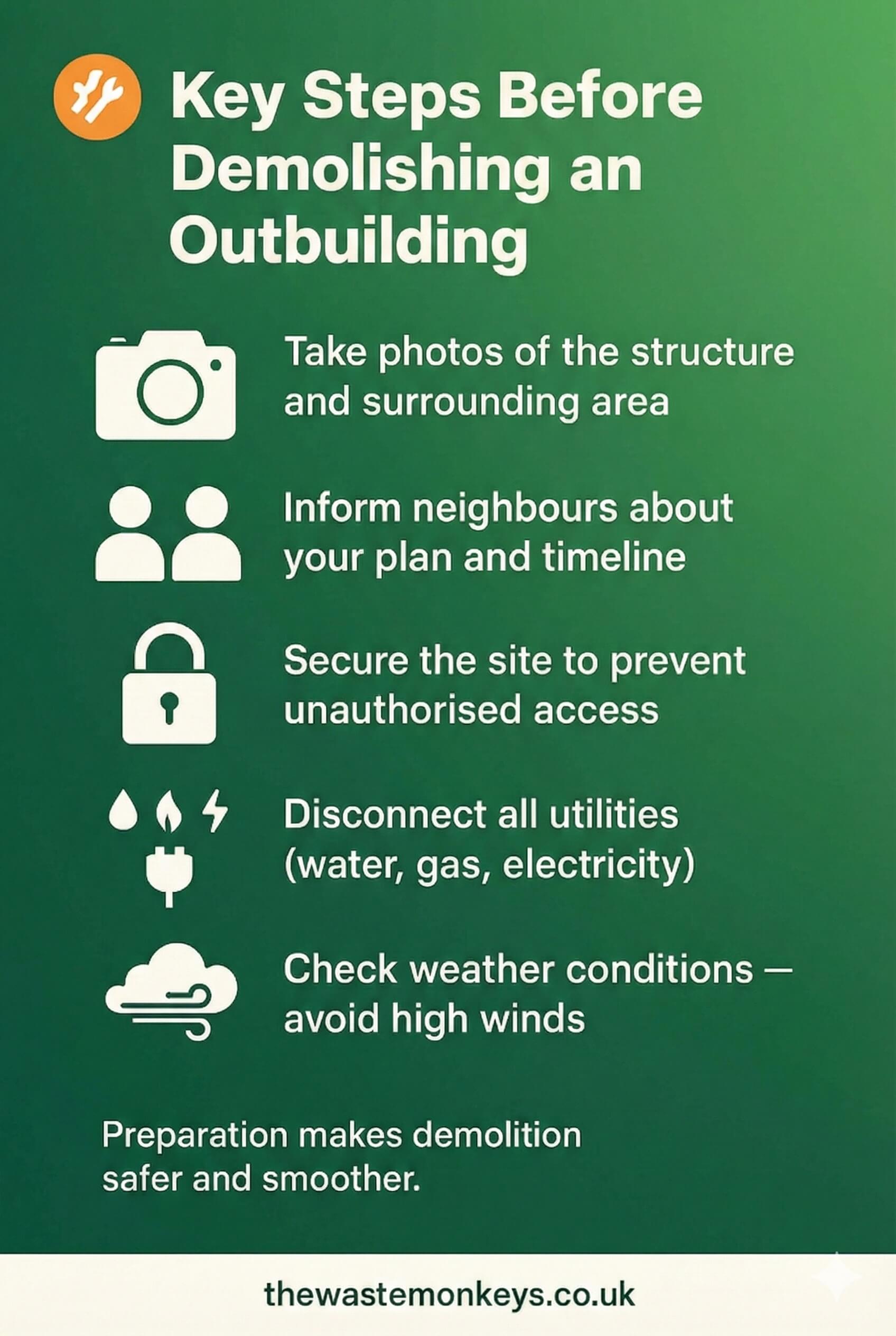
Professional demolition contractors have the equipment and expertise to handle these projects safely and legally. When dealing with larger structures, hiring professionals is usually the wisest choice.
Conclusion
For safe, compliant demolition work, professional services offer peace of mind. Our team at The Waste Monkeys provides expert demolition services across the UK, ensuring all legal requirements are met and waste is properly disposed of. Contact us today for a free consultation on your demolition project.
FAQs
Can I demolish a garage without planning permission in the UK?
If your garage is under 50 cubic metres in volume and outside a conservation area, you generally don’t need planning permission in England. However, you must still notify the local authority under Building Act regulations and follow proper waste disposal procedures.
Do I need planning permission to demolish a shed in my garden?
Most garden sheds fall below the 50 cubic metre threshold and can be demolished without planning permission unless they’re in conservation areas or attached to listed buildings. Safety regulations and waste disposal requirements still apply regardless.
What happens if I demolish an outbuilding without required permission?
Unauthorised demolition can lead to enforcement action, including potential fines and orders to restore the site. In conservation areas or for listed buildings, penalties can be severe, including unlimited fines and criminal prosecution in serious cases.
Are the rules different for demolishing outbuildings in conservation areas?
Yes. In conservation areas, demolition of buildings over 50 cubic metres typically requires planning permission in England or Conservation Area Consent in Wales, Scotland, and Northern Ireland. Local authorities take a stricter approach to preserving character in these areas.
Do I need to notify neighbours before demolishing my garden outbuilding?
If the outbuilding shares a wall with neighbours or is close to boundaries, you may need to serve notice under the Party Wall Act. Even when not legally required, informing neighbours is good practice to maintain relationships and prevent complaints.